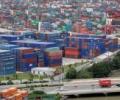
Street believes premium valuations justified, as port traffic is expected to grow at a CAGR of 16% over FY14-16.

Indian benchmark equity indices, Sensex and Nifty, closed higher on Monday, driven by softer-than-expected US jobs data which reduced expectations of aggressive monetary tightening by the US Federal Reserve, boosting risk appetite across emerging markets.
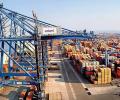
S&P Dow Jones Indices on Tuesday said it will remove Adani Ports and Special Economic Zone from its sustainability index following reports of its business ties with Myanmar's military that has been accused of human rights violations after a coup. The Adani Group firm is building a $290 million port in Yangon. In a statement, S&P Dow Jones Indices said: "Adani Ports and Special Economic Zone will be removed from the Dow Jones Sustainability Indices following a media and stakeholder analysis triggered by recent news events pointing to heightened risks to the company regarding their commercial relationship with Myanmar's military, who are alleged to have committed serious human rights abuses under international law."

Billionaire Gautam Adani's group has pulled out of a loan deal with a US agency to fund a port terminal in Sri Lanka, saying it will use its own resources for the project. In an exchange filing late on Tuesday, Adani Ports and Special Economic Zone Ltd (APSEZ) said the project "is on track for commissioning by early next year". "The project will be financed through the company's internal accruals and capital management plan," the firm said.

The Indian stock market experienced a significant downturn, with the Sensex crashing over 1,000 points and the Nifty hitting a fresh 52-week low, driven by sustained selling from foreign institutional investors, the RBI's monetary policy tightening, and elevated Brent crude prices.

Indian stock markets experienced a significant downturn, with the Sensex plunging 1,124 points to a six-month low and the Nifty closing below 22,800, driven by surging crude oil prices, escalating geopolitical uncertainties, and weak global market trends.

Indian benchmark indices, Sensex and Nifty, saw declines in early trade due to escalating crude oil prices and ongoing US-Iran hostilities, which subdued investor risk appetite.

Indian benchmark indices, Sensex and Nifty, traded flat in early deals due to elevated crude oil prices exceeding USD 100 per barrel and persistent geopolitical tensions, which subdued investor risk appetite.

Indian equity benchmark indices Sensex and Nifty rebounded sharply in early trade, with the Sensex jumping over 530 points, tracking a broad-based rally in Asian markets after four consecutive days of decline.
Indian benchmark equity indices, Sensex and Nifty, closed mixed on Friday. While a drop in crude oil prices offered some relief, weakness in IT stocks and several Tata Group counters, including a significant dip in Tata Chemicals and ongoing boardroom issues at Tata Sons, limited a broader market recovery.
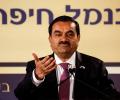
Adani Group has agreed to pay USD 275 million to settle allegations of violating US sanctions on Iran. The U.S. Treasury Department's Office of Foreign Assets Control (OFAC) acknowledged the Indian conglomerate's extensive cooperation and proactive disclosures during the investigation.

Indian-flagged vessels are navigating the Strait of Hormuz safely despite ongoing tensions in the region, ensuring the continued flow of vital energy supplies to India.
Indian stock market benchmark indices Sensex and Nifty recorded their second consecutive day of decline, with the Sensex dropping 555.23 points and the Nifty falling 144.05 points, primarily due to rising crude oil prices and ongoing US-Iran hostilities in West Asia.
Indian benchmark indices Sensex and Nifty closed lower, with the Nifty recording its fourth consecutive day of decline, primarily due to elevated oil prices and ongoing geopolitical tensions between the US and Iran, which dampened investor sentiment.

Indian benchmark indices, Sensex and Nifty, saw declines in early trade, with the ongoing US-Iran standoff cited as a major factor impacting investor sentiment and raising concerns about inflationary pressures and currency volatility for oil-importing nations like India. Track Sensex, Nifty on August 14, 2026.

Indian stock markets, including the Sensex and Nifty, experienced a significant tumble in early trade, driven by escalating tensions in West Asia that pushed crude oil prices close to the USD 100-per-barrel mark, alongside selling in IT stocks and fresh foreign fund outflows.

Indian benchmark equity indices extended their losing streak for a fourth consecutive day, with the Sensex tumbling 417 points due to rising crude oil prices and a significant sell-off in IT stocks, impacting overall investor sentiment.

Indian benchmark indices, Sensex and Nifty, bounced back significantly after two days of losses, with the Sensex climbing 443.97 points to settle at 76,922.64, driven by positive global market trends and a drop in crude oil prices.

Indian benchmark indices, Sensex and Nifty, experienced a significant downturn, with Sensex tanking 778 points and Nifty closing at a five-month low, driven by surging crude oil prices, geopolitical tensions, and fears of further interest rate hikes by major central banks.
Indian stock markets closed lower due to selling in IT and FMCG shares, triggered by renewed tensions in West Asia which led to a rally in crude oil prices and concerns over inflation and interest rates.

Auditor Deloitte flagged three transactions, including recoveries from a contractor identified in the Hindenburg report, as it issued a qualified opinion on the accounts of Adani Ports & Special Economic Zone.

Proceeds likely to be used for Dhamra port buy.
The benchmark BSE Sensex rebounded by 362 points, ending a four-day losing streak, driven by strong buying in metal, private banking, and oil and gas shares, while the broader NSE Nifty saw modest gains despite paring some advances in the closing session.

Hundreds of fisherfolk, including women, reached the area via road and sea and broke open the lock of the gate of the project site, raising slogans.

Indian benchmark indices Sensex and Nifty experienced declines in early trade, influenced by the escalating US-Iran standoff and persistently high crude oil prices, with experts predicting increased volatility.
Indian benchmark equity indices, Sensex and Nifty, closed lower due to persistent geopolitical tensions in the Middle East and elevated crude oil prices, with investors remaining cautious ahead of fresh US sanctions on Iran.

A mob of agitators led by the Latin Catholic church Sunday night attacked Vizhinjam police station in Thiruvananthapuram in protest against the construction of Adani port, injuring at least 29 policemen and damaging police vehicles.

India's government is working to resolve tax and regulatory hurdles to bring Formula One back to the Buddh International Circuit on the outskirts of New Delhi in 2028, more than a decade after the race was dropped.
The benchmark Sensex plummeted 813 points to a three-month low, with the Nifty settling below 23,450, as escalating tensions in West Asia drove crude oil prices above USD 100 per barrel, leading to widespread selling in IT, FMCG, financial services, and oil & gas shares.
Indian benchmark indices Sensex and Nifty experienced a significant slump in early trade, mirroring a bearish trend in global equities, as escalating conflict in West Asia drove up crude oil prices and intensified investor concerns.
The Adani Group is exploring strategies to revive Formula 1 racing at the Buddh International Circuit in Greater Noida, with Karan Adani expressing strong interest in bringing the sport back to India.
Indian benchmark indices, Sensex and Nifty, opened in positive territory, primarily driven by a strong performance in IT stocks, sustained foreign fund inflows, and a dip in global crude oil prices, despite a hawkish stance from the US Federal Reserve. Track Sensex, Nifty on July 30.

Justice Anu Sivaraman also said that no one will be allowed to play politics under the garb of the ongoing agitation at the multi-purpose seaport at Mulloor in Thiruvananthapuram district.

Indian benchmark indices, Sensex and Nifty, opened higher on Friday, primarily driven by a significant surge in Bajaj Finance shares following its strong Q1 FY27 earnings report, coupled with continued foreign fund inflows and a dip in crude oil prices. Track Sensex, Nifty on July 31.

Indian benchmark indices Sensex and Nifty recorded sharp gains, rising over 1 per cent, driven by strong performances in IT stocks, HDFC Bank, and renewed foreign fund inflows, despite mixed global cues and elevated crude oil prices.

Indian benchmark indices Sensex and Nifty rebounded in early trade after three days of decline, driven by a rally in Sun Pharma following its USD 11.75 billion acquisition of US-based Organon & Co, alongside a positive trend in global equity markets.

Indian benchmark indices Sensex and Nifty extended their losses for the fourth consecutive session, with the Sensex declining 363.66 points and the Nifty dipping 126.65 points, primarily due to a sharp jump in Brent crude oil prices to USD 98.32 per barrel amid escalating tensions in West Asia.

Going against the assurances given to the Kerala high court, the protesters agitating in front of the under-construction Vizhinjam seaport had on Saturday blocked the trucks carrying construction materials to the site.
Indian benchmark indices Sensex and Nifty recorded their third consecutive day of gains, primarily driven by an over 8 per cent surge in Bajaj Finance following strong Q1 FY27 results, coupled with significant foreign fund inflows and a dip in crude oil prices.

The Rs 56,000-crore (Rs 560 billion) Adani Group on Monday received a major blow from the Gujarat High Court, which ordered a shutdown of 12 units in Adani Ports and Special Economic Zone (APSEZ), located in Mundra, Kutch district, with immediate effect.
